Basic Electrical Terms and Laws
Definitions to keep in the back of your head
- Electric charges
- Positive or negative or neutral
- Like repel, unlike attracts each other
- Energy is the ability to do work → our focus is Electrical Energy
- What is the work in Electrical Energy? Moving electrons through a material (usually wire)
- Conductors
- Electrons can move freely → current flows
- Most conductive is silver but copper is cheaper and more abundant
- Insulators
- Electrons can not move freely → current does not flow
- Semiconductors
- As the name may have well suggested it is an in-between of conductors and insulators
- Metalloids doped with impurities allows for “movement of electrons and holes”
- Circuit
- Closed path allowing continuous flow of electrons from one point to another
Never forget Ohm’s Law V=IR and P=VI
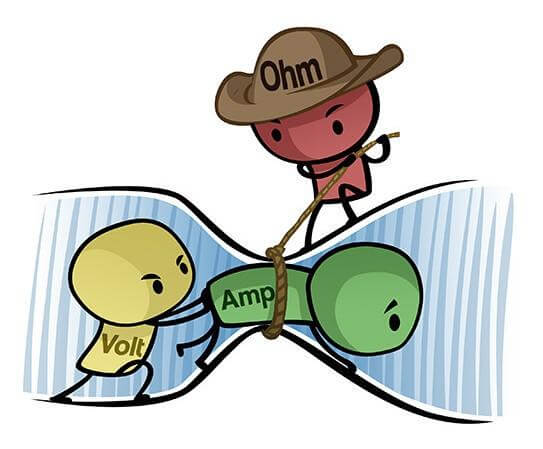
- I = Current (Amps) = flow of charge
- But conventional current flows opposite, from positive to negative
- People never bothered to fix this
- V = Voltage (Volts) = potential energy difference between 2 points on circuit
- It is what makes the charge move
- R = Resistance (Ohms) = restricts flow of charge
- P = Electric Power (Watts) = rate at which energy is transferred/used
- The more power, the more energy (and unfortunately the more money)
- Here is a Sparkfun video

Voltage Range and Current Requirements
- Components have a specific voltage range
- Lower than required voltage, component won’t power on
- Too high, will most likely become nonfunctional, destroyed
- Current range is less specific
- Power supply does not provide enough Amps needed, voltage drops and brownouts problems
- If the power supply provides more Amps than component’s rated, just fine
- Component takes what it needs
- Components like motors have:
- No load current: min current needed to start the motor without anything attached to it
- Nominal current: current needed for normal use, e.g. rover driving around
- Stall current: max current draw under edge conditions, e.g. the wheel got stuck but the motor keeps trying to rotate.
Series and Parallel
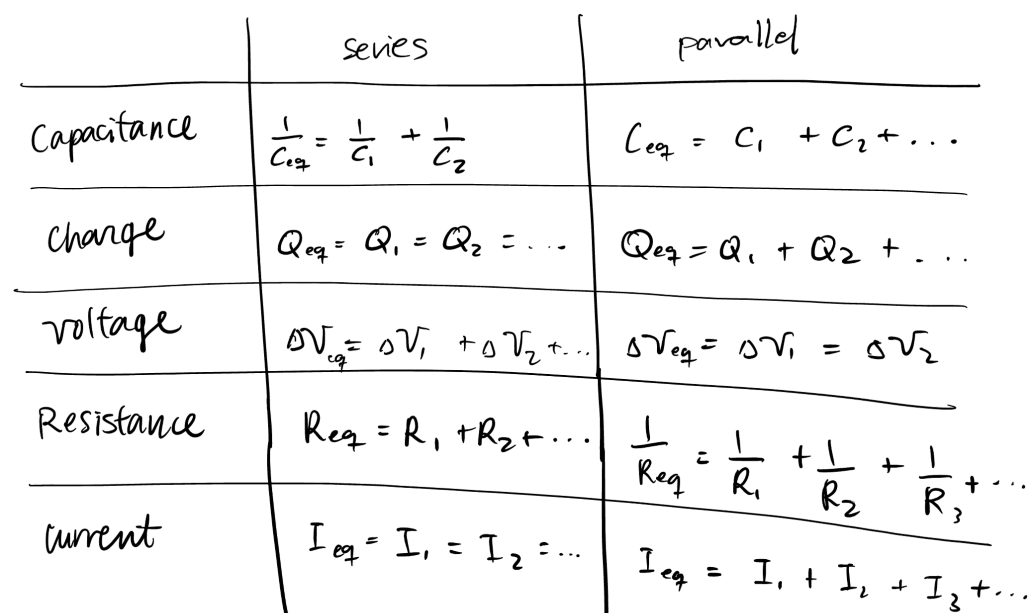
- Voltage in parallel branches is the same
- Current across branches in series is the same